Microscopic World: CryoFM and the Future of Cryo-EM Density Modeling
What is Microscopic World: CryoFM and the Future of Cryo-EM Density Modeling
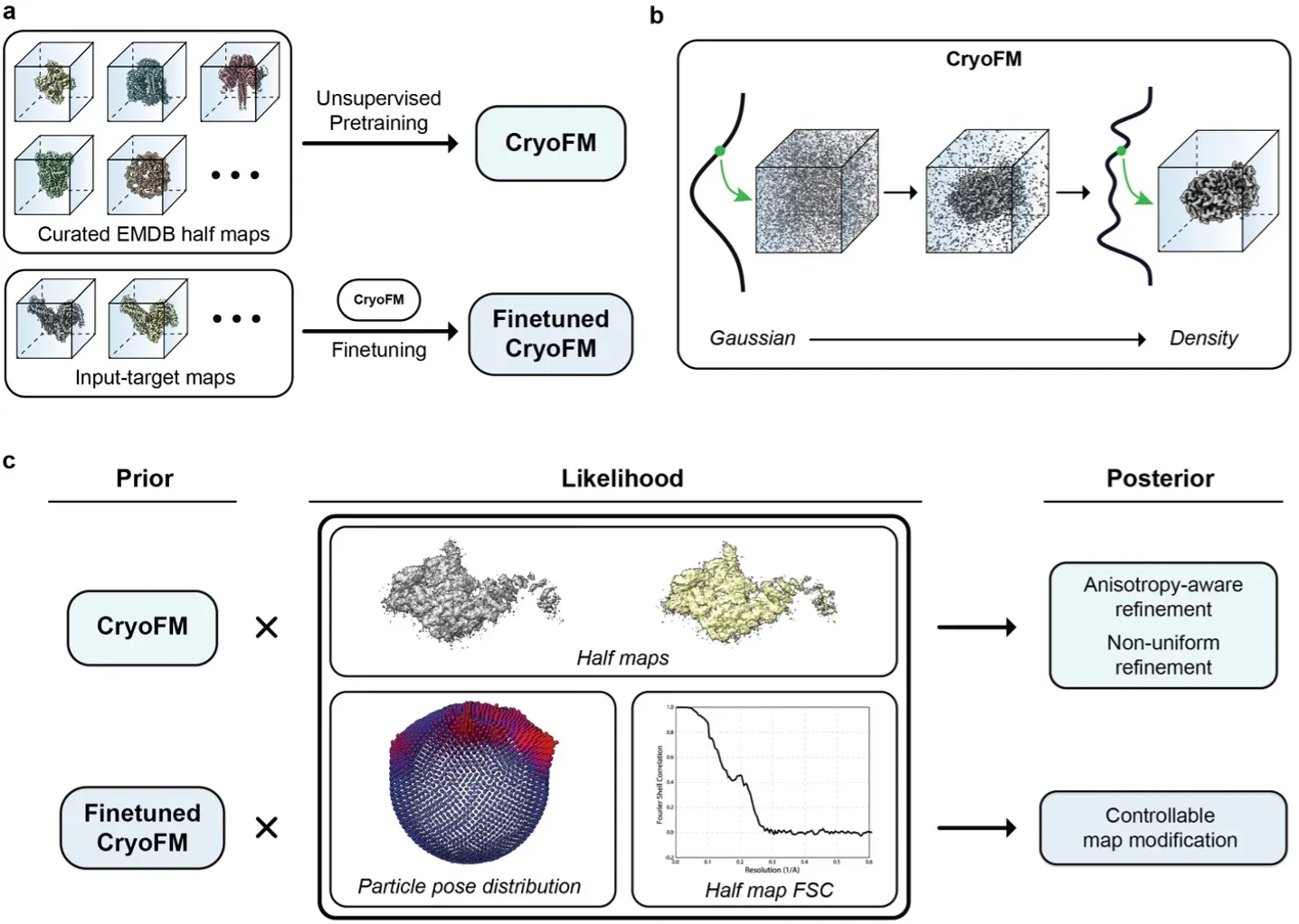
CryoFM is a family of AI models that help scientists build and refine 3D shapes of proteins from cryo‑electron microscopy (cryo‑EM) data. It learns patterns from many protein density maps and then guides new reconstructions to be clearer, sharper, and closer to real structure.
The project brings three parts together: CryoFM (the first model), CryoFM2 (applied to real lab data with physics-aware steps), and CryoSTAR (helps with shape changes across states). Together, they aim to make cryo‑EM map building faster and more reliable for everyday research.
Microscopic World: CryoFM and the Future of Cryo-EM Density Modeling Overview
Here is a quick look at what the project is and why it matters.
| Key | Detail |
|---|---|
| Project Name | Microscopic World: CryoFM and the Future of Cryo‑EM Density Modeling |
| Type | AI foundation models for cryo‑EM density maps |
| Purpose | Help create and refine 3D protein density maps from cryo‑EM data with higher quality and fewer artifacts |
| Main Components | CryoFM (flow‑matching prior), CryoFM2 (generative model for real data with physics‑aware steps), CryoSTAR (handles shape variability) |
| Works With | Cryo‑EM workflows and RELION refinement (physics-aware process integrated) |
| Key Abilities | Generative prior over biomolecular densities, fine‑tuning for post‑processing tasks, support for heterogeneous structures |
| Who It’s For | Structural biologists, cryo‑EM labs, method developers, and AI4Science teams |
| Inputs | Experimental cryo‑EM data and density maps |
| Outputs | Cleaner, more faithful 3D density maps and better refinements |
| Status | Research project with publications from 2023–2025 |
| Website | Visit the project site: CryoFM |
| Project Overview | A growing set of tools and studies that show how AI can help cryo‑EM at key steps, from initial maps to refined models |
For a plain‑language intro to AI terms used by tools like this, check our short guide here: read an AI explainer.
Microscopic World: CryoFM and the Future of Cryo-EM Density Modeling Key Features
- Learns a strong prior from many known protein maps. This prior helps new reconstructions keep true protein‑like details.
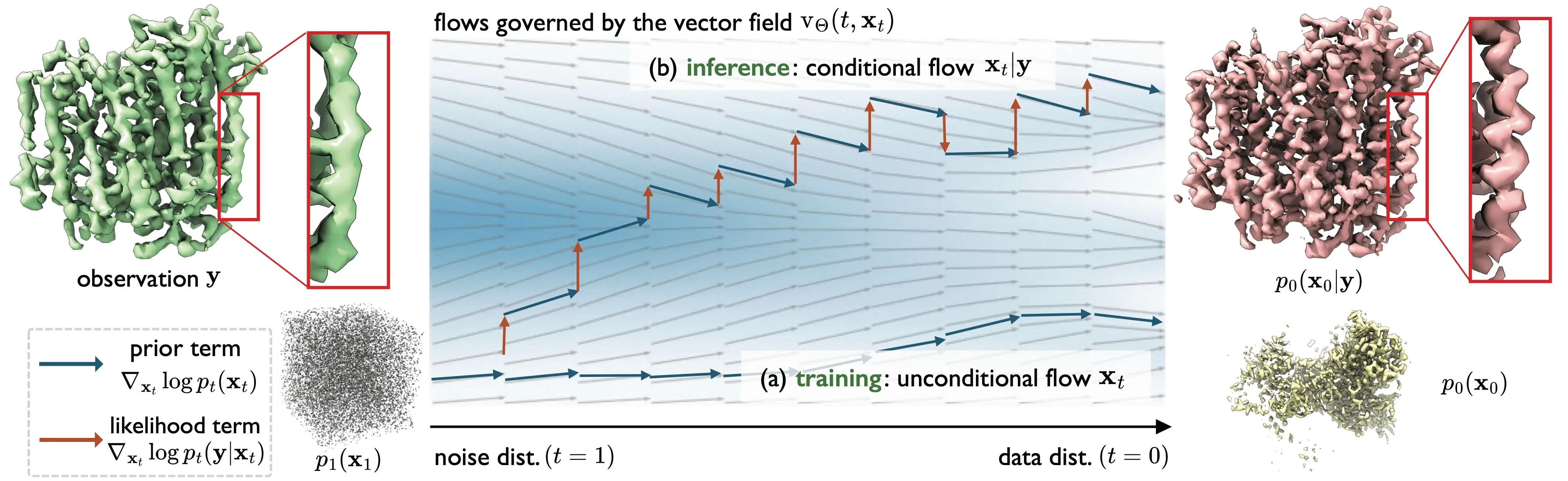
- Flow‑matching model in CryoFM guides a clean path from noise to a consistent 3D map. This helps reduce blur and common errors.
- CryoFM2 brings the method to real lab data. It adds physics‑aware steps into RELION refinement for better final results.
- Fine‑tuning ability: adapt the model to tasks like post‑processing or sharpening, based on project needs.
- Handles shape changes: CryoSTAR supports heterogeneous reconstruction, helping when molecules shift between states.
- Research‑backed: papers and notes show progress on data, benchmarks, and open model ecosystems.
Microscopic World: CryoFM and the Future of Cryo-EM Density Modeling Use Cases
- Faster map building for new projects when the signal is weak or data is limited.
- Post‑processing to clean maps, reduce noise, and bring out side‑chain‑level clues.
- Refinement inside RELION with physics‑aware steps that keep reconstructions consistent.
- Study of flexible proteins with multiple shapes, supported by CryoSTAR.
- Training and method development in AI4Science teams using shared data and benchmarks.
Performance & Showcases
The team reports steady progress across multiple releases:
- CryoFM2: A Generative Foundation Model for Cryo‑EM Densities (Dec 24, 2025). Extends CryoFM to real experimental data, adds physics-aware process into RELION, and shows fine‑tuning on post‑processing tasks.
- CryoFM: A Flow‑based Foundation Model for Cryo‑EM Densities (Oct 15, 2024). Shows that flow‑matching can learn a prior over biomolecular density maps.
- CryoSTAR: Structural Prior and Constraints for Cryo‑EM Heterogeneous Reconstruction (Dec 6, 2023). A structural regularization approach, validated on rse experimental datasets.
You can explore these write‑ups and examples on the project site: CryoFM publications and updates.
How It Works
- Learn from many known maps. The model picks up common protein patterns and forms a “mental model” of what a good map looks like.
- Guide new reconstructions. Starting from noisy inputs, the model helps shape the final 3D map toward those learned patterns.
- Close the loop with physics. In CryoFM2, a physics‑aware process in RELION checks and corrects the map, so the final result fits the data and stays realistic.
Curious about our broader work and writing style? Here is a simple overview page: about this blog.
The Technology Behind It
CryoFM uses flow matching to learn a smooth path from noise to structure. In plain terms, it learns how to “clean up” a map step by step, keeping protein‑like features the whole way.
CryoFM2 takes that learned skill to real lab data. It adds physics‑based checks inside RELION so results follow the rules of the experiment.
CryoSTAR focuses on shape changes. It adds structure‑aware constraints so different conformations can be reconstructed more faithfully.
Getting Started
- Visit the project site at CryoFM for links to papers, model notes, and practical tips.
- Start with “CryoFM: A Flow‑based Foundation Model for Cryo‑EM Densities” to learn the core idea.
- Then read “CryoFM2: A Generative Foundation Model for Cryo‑EM Densities” for steps that work on real data and fit into RELION refinement.
- If your sample has multiple states, review “CryoSTAR” for handling heterogeneity and constraints.
If you need help finding the right next step for your lab or team, reach out here: contact the editor.
Who Benefits Most
- Cryo‑EM labs that want cleaner maps and better refinements with fewer trial‑and‑error cycles.
- Structural biologists who need to resolve fine details for model building and validation.
- Method developers exploring AI4Science who want strong priors, datasets, and benchmarks to build on.
Tips for Best Results
- Keep your input data organized and documented. Good metadata helps any model do better.
- Use RELION refinement with physics‑aware steps as described in CryoFM2 materials.
- Consider fine‑tuning the model for your post‑processing task if your target proteins have special traits.
Frequently Asked Questions
What is a cryo‑EM density map?
It is a 3D grid that shows where electrons likely scatter from a molecule frozen in ice. Scientists read this map to build the atomic model step by step.
How is CryoFM different from classic cryo‑EM tools?
Classic tools focus on reconstructing maps from raw images. CryoFM adds an AI prior learned from many maps, which helps push the result toward protein‑like shapes.
Can I use CryoFM2 with RELION?
Yes. CryoFM2 includes a physics‑aware process that works with RELION refinement. This helps keep the final map faithful to the data as well as to known protein patterns.
Does it help with flexible proteins that switch shapes?
Yes. CryoSTAR is meant to support heterogeneous reconstruction. It adds structure‑aware constraints so multiple states can be resolved more cleanly.
Where can I read the papers and follow updates?
You can find the latest papers and notes on the project website: CryoFM. New articles and technical notes are listed under “Latest Publications.”
How do I get practical setup steps?
The project site links to papers and pages that describe setup and refinement details. Follow those guides for the most current steps and tool versions.
Image source: Microscopic World: CryoFM and the Future of Cryo-EM Density Modeling